

High Design
Inside Roger Thomas’ Breathtaking California Home
Roger Thomas has spent a lifetime shaping some of the world's most recognizable interiors, from the theatrical grandeur of Las Vegas hotels, global resorts, and private residences layered with history and meaning. Yet his home in Marin County reveals a more personal side of the celebrated designer. Set on eight secluded acres beneath centuries-old oak trees, the house is less an exercise in decoration than an ongoing conversation between architecture, art and collecting.
Roger and his husband, Arthur, discovered the house almost by accident after an exhaustive search for a home in San Francisco. Roger and Arthur divide their time between Marin and an equally remarkable home in a 16th-century palazzo overlooking Venice's Grand Canal.
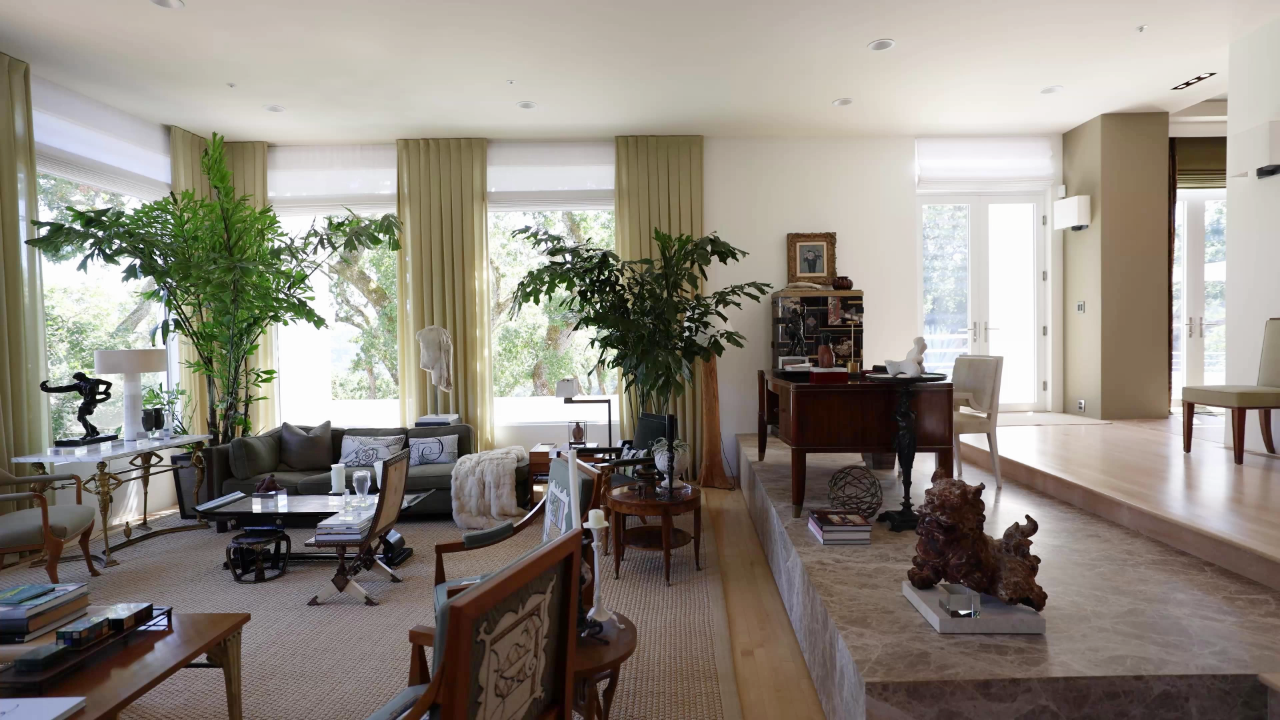
What convinced them to venture farther north was not convenience but architecture. Designed by Daniel Solomon in the late 1990s, the house was originally conceived as an exercise in restraint: white walls, white fixtures and almost no furnishings. "Anything is worth living in a beautiful piece of architecture," Roger says.
Respecting that clarity became the guiding principle of the renovation. Rather than overwhelm Solomon's disciplined design, Roger introduced warmth through carefully calibrated color and an extraordinary collection assembled over decades. A deep olive green, inspired by the backgrounds in Jacques-Louis David's portraits, replaced the original white interiors, echoing the surrounding landscape while providing a rich backdrop for paintings, sculpture and furniture.
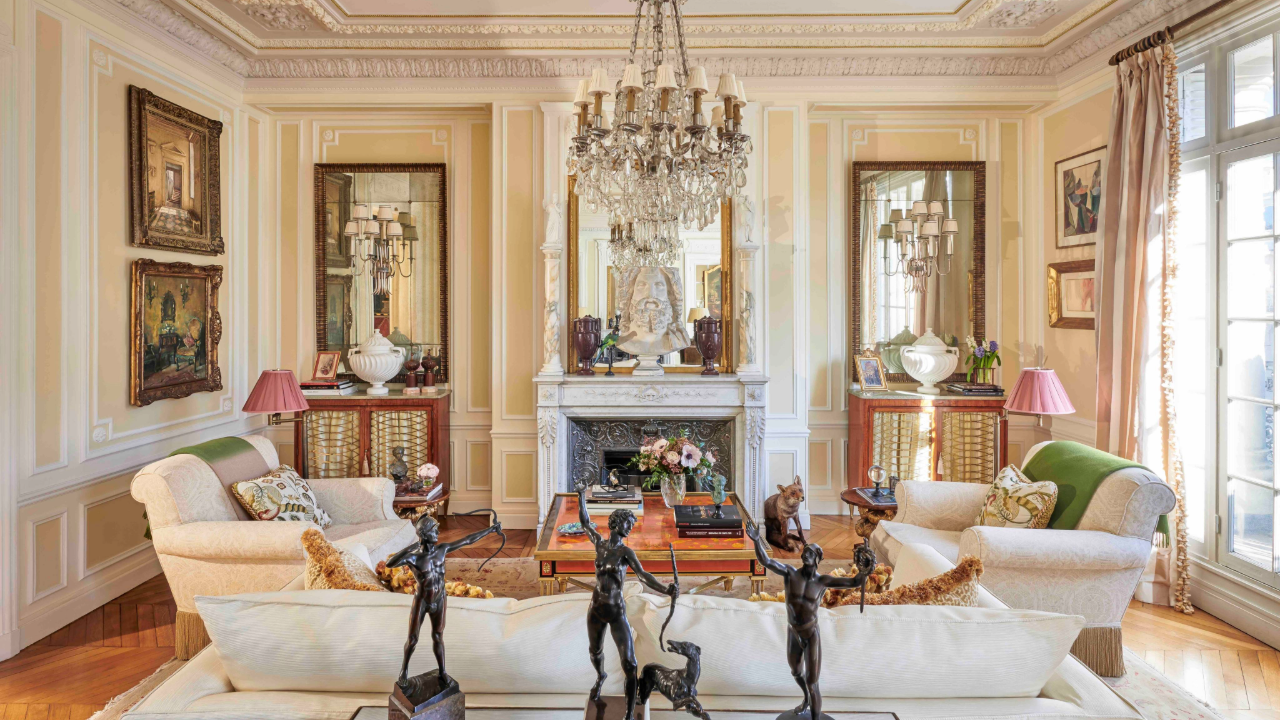
The result feels remarkably cohesive despite spanning centuries. A Cézanne still life hangs above a contemporary cabinet by Hervé Van der Straeten. Giorgio Morandi landscapes converse with ancient Greek vessels, Chinese brush pots and French Art Deco furniture. Throughout the house, Roger resists chronology in favor of visual harmony, allowing objects from vastly different periods to share the same architectural space.
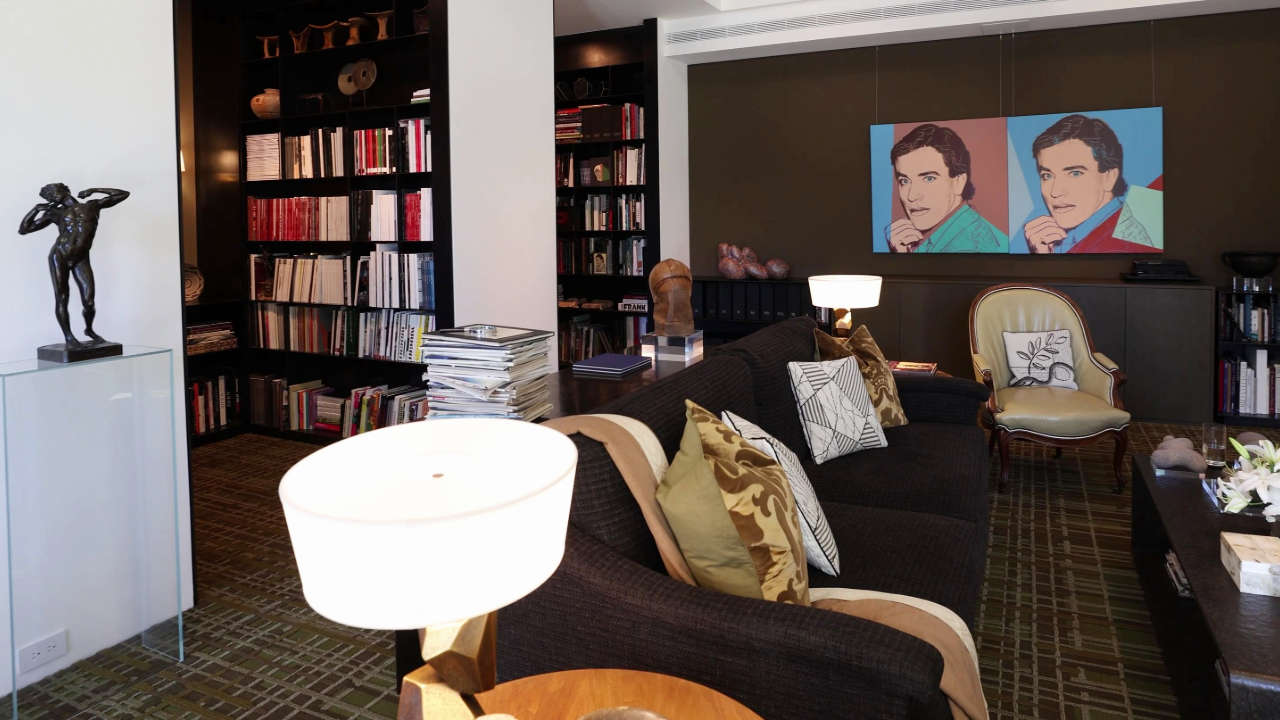
Among the collection's most personal works is a double portrait of Roger by Andy Warhol, commissioned in 1981 when the designer was just 30 years old. Convinced that American portraiture was in decline, Roger commissioned 10 artists to create his likeness, with Warhol producing the now-iconic screen print. "He said, 'I hope you like it—I made your eyes bluer than Paul Newman's,'" Roger recalls. In another room, a striking pair of black-and-white portraits by Robert Mapplethorpe captures the young designer with the same quiet intensity, offering another glimpse into a formative moment in his life and career.
Collecting, for Roger, has always been about pursuing variations on a theme. Chairs appear throughout the house in seemingly endless interpretations, from André Arbus to Jean-Michel Frank and Tommaso Buzzi. Candlesticks receive the same scholarly attention. So does the recurring figure of Saint Sebastian, represented in paintings, sculpture and mosaics. Rather than feeling repetitive, these collections reveal how endlessly designers and artists reinterpret familiar forms.
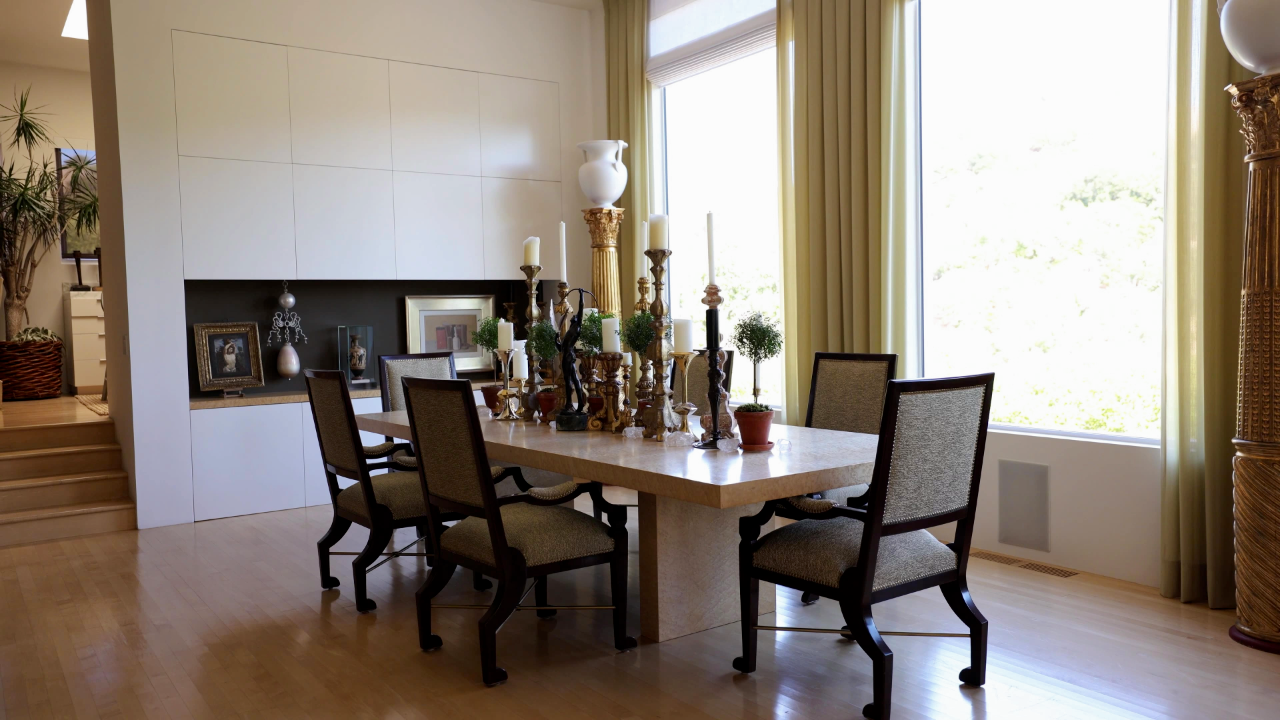
The home's architecture quietly accommodates this abundance. The principal living room combines workspace, entertaining space and library, reflecting Roger's long-held belief that formal rooms should serve multiple purposes. His desk faces the hills of Marin, allowing him to pause from work and look out toward Mount Tamalpais. Nearby, needlepoint pillows—stitched by Roger himself—soften French seating while serving as highly personal works of art in their own right.
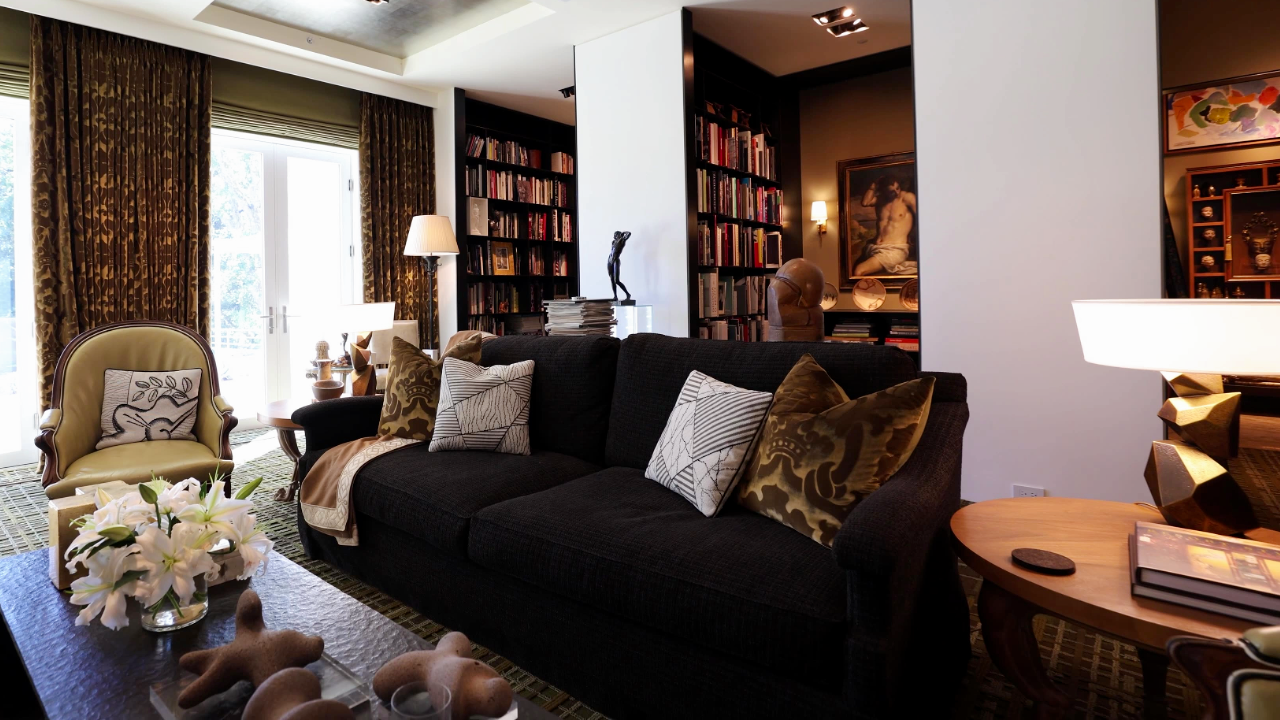
Books are equally central to the home. The library, created from what was once the property's indoor swimming pool, houses three rows of carefully catalogued volumes on architecture, art history and design. Here, works by Donald Judd and old masters sit alongside Roger's own ceramics, underscoring the breadth of a collection built through decades of curiosity rather than any single aesthetic.
Outside, the landscape is deliberately understated. Native plantings, dark green pool plaster and restrained hardscaping allow the ancient oaks to remain the dominant presence. "The oak trees are the reason we bought the house," Roger says. "I really think of them as sculpture."
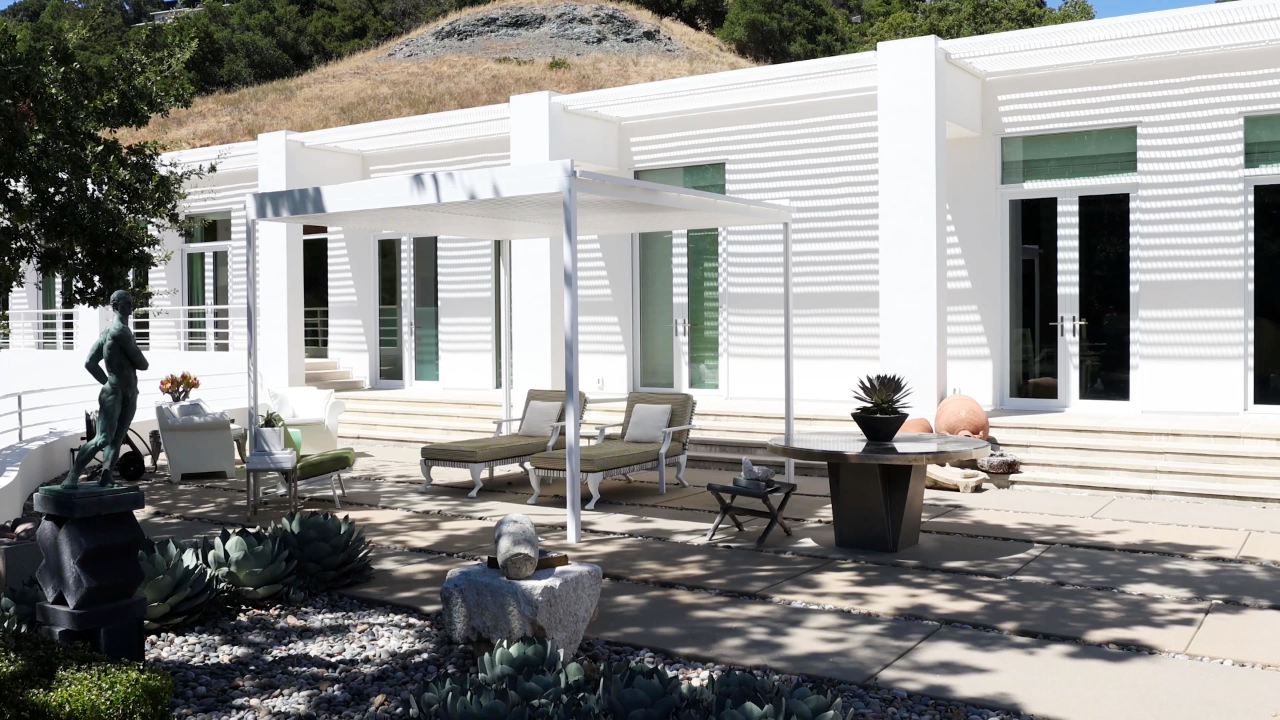
Although the collections are museum-worthy, nothing feels static. Roger constantly rearranges vignettes, rotates artworks and introduces new acquisitions, treating the house as what he calls "a laboratory." The architecture remains the constant; everything else continues to evolve. It is this balance—between permanence and curiosity, discipline and delight—that gives the home its enduring elegance.
SWOON-WORTHY NEWSLETTER